G B A q u a

STP Plant Manufacturer In India

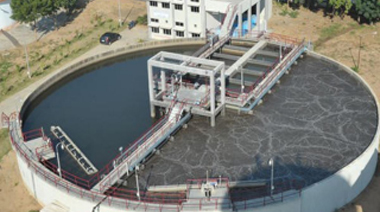
Sewage Treatment Plant (STP), also known as a Wastewater Treatment Plant or water reclamation facility, is a facility designed to treat and purify sewage and wastewater to make it safe for disposal or reuse. The primary goal of an STP Plant is to remove contaminants and pollutants from domestic, industrial, and commercial sewage to protect the environment and public health.

A Wastewater Treatment Plant removes contaminants from sewage to produce effluent that can be discharged to the surrounding environment or reused. hence preventing water contamination from raw sewage discharges. . Choosing among the various available technologies & designing STP depends mainly on the source of wastewater generated, the number of working hours of the plant, and the parameters we want in output.

Choosing among the various available technologies & designing STP depends mainly on the source of wastewater generated, the number of working hours of the plant, and the parameters we want in output.


Confused in Technologies? Consult Us

As a consultant for Water & Wastewater Treatment Plant, we can provide you with the best technologies to treat wastewater according to regulations set by State Pollution Control Board (SPCB) or Central Pollution Control Board (CPCB) of India. With rising volumes of waste, careful attention must be given to its treatment and disposal. The most suitable solution is Sewage Treatment Plant. Not only does GBAQ specialize in manufacturing, but we also provide effective consultancy services to help our clients find the optimal solution.

Our turnkey solutions include fabrication, design, supply, erection, testing, and commissioning of all types of plants, including Activated Sludge Process, UASB, MBBR, SAFF, and MBR. It will also extend its consulting services to increasing the reuse and recycling of water available at the premises, in addition to ensuring reliability, low running costs, odourless, noiseless, high-water quality, and fast commissioning times.

It is imperative that sufficient time and resources are allocated to different stages of commissioning and start-up to ensure a successful operation of any facility or plant.


STP Plant installed by us in various Industries

πŸ”‹ Battery Manufacturing
πŸ₯ Institutions & Hospitals
🏭 Food Industry
πŸ› οΈ Iron & Steel Industries
⚑ Electric Power Plants
πŸ§ͺOrganic Chemical Manufacturing
βš›οΈ Nuclear Industry
πŸ‘· Mines & Quarries
β›½ Petroleum Refining & Petrochemicals
πŸ“„ Pulp & Paper Industry
🏼 Textile Dyeing
🏼 Pharmaceutical Industry

Parameters Set by Pollution Control Board before Discharging Effluent

Once wastewater has been treated, it must meet all the criteria for discharge. This is typically governed by the local authorities, such as the municipality or SPCB/CPCB of India, who set limits on allowable concentrations of pollutants likely to be present. The destination for this effluent could range from lakes, streams, or rivers to seas, estuaries and beyond.


Parameters Set by Pollution Control Board before Discharging Effluent

Sr. No Parameters Effluent
1 Ph 5.5-9.0
2 BOD ≀ 20 mg/l
3 COD ≀ 250 mg/l
4 Oil & Grease ≀ 5 mg/l
5 Total Suspended Solids ≀ 30 mg/l
6 Nitrogen ≀ 5 mg/l
7 Ammonia Nitrogen ≀ 50 mg/l
8 Phosphorous ≀ 5 mg/l
9 Total Coliform 1000 no./100 ml

STP Maintenance Services

With GBAQ, you will receive highly efficient STP Maintenance Services from highly skilled professionals, ensuring ultimate customer satisfaction. Among the services we offer are: - Consultancy, Plant design, commissioning, installation, and maintenance.


Installation & Commissioning of Plant
Extension Work Of STP Plant
Repair & Maintenance Work of STP
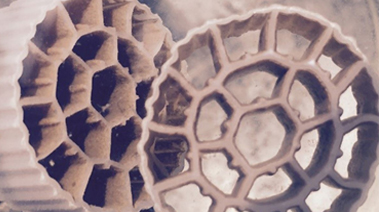
Chemicals and Media

STP Plant – FAQs


  • Q1.What is Sewage Treatment Plant?

  • Ans. Effluent Treatment Plant are designed to treat both municipal and industrial effluent, which consists of wastewater, sludge or sewage. These effluent treatment plants are tailored to remove harmful pathogens, clear hazardous chemicals, detergents and toxins, and separate and extract valuable substances from effluent.

  • Q2. How does Sewage Treatment Plant work?

  • Ans. Spanning Tree Protocol (STP) identifies links in a network and shuts down redundant links to prevent potential network loops. To do this, all switches in the network exchange her BPDU messages with each other to agree on a root bridge.

  • Q3. What is treatment of sewage treatment plant?

  • Ans. Sewage Treatment Plant (STP) treats wastewater from various businesses for safe disposal. It performs physical, chemical, and biological processes to remove contaminants and produce clarified wastewater that is safe enough to be discharged into the environment.

  • Q4. Why are sewage treatment plants important?

  • Ans. Microscopic organisms present in wastewater can cause dysentery, gastroenteritis, and cholera. 97% of these harmful microscopic contaminants can be removed by the treatment process. This prevents these contaminants from entering the water source and ultimately harming humans, animals and plants.

  • Q5.What Is the Difference between STP & ETP?

  • Ans. Sewage Treatment Plant is used to treat human waste while ETPs (Effluent Treatment Plants) are used to treat chemical waste from hospitals, chemical and paint industries, etc., and vice versa. Both fall under wastewater treatment.

  • Q6. How to choose the right STP design and Technology?

  • Ans. It's easy to explain what not to do when choosing a wastewater treatment design and technology. Depending on the requirements and experience of consultants, architects and builders using different technologies of sewage treatment systems for wastewater treatment systems, they should be able to select the technology for their clients. Many wastewater treatments have failed because plumbing (MEP) consultants applied the principles of large-scale wastewater treatment plants to small and medium-sized plants. Plumbing consultants should not be engaged in the design of wastewater treatment systems unless they are qualified environmental engineers. Some consultants claim to be technology neutral for wastewater treatment. I mean, they know nothing about sewage treatment plants. Contractors and architects should only use plumbing consultants for plumbing and should not hire consultants to design and validate a project wastewater treatment plant. Finally, once the installation consultant has determined the technical options for the project, the technical provider should be asked to provide the design of the facility. Do not use billing methods for wastewater treatment systems that have no basis for design. If you need to deliver the right equipment design and engineering choices to your customers, you will need to change how you procure STP.

  • Q7. What is the working principle of a sewage treatment plant?

  • Ans. The main purpose of a sewage treatment plant is to treat raw sewage so that it can be either discharged at sea or dumped on land. The first step in this process is the introduction of raw sewage into the primary chamber through a coarse filter. This is where heavy gravel settles under its own weight, leaving behind a mixture of fine solid debris and water. This mixture is then introduced into a vented chamber. Here, fresh batches of aerobic bacteria are added or regenerated from some of the sludge and waste left over from the last treatment. These microorganisms utilize available oxygen and organic waste to reproduce and grow. In doing so, it converts organic matter into carbon dioxide, ammonia, and other by-products, including inorganic and organic residues. The time required for the process depends on many factors. But most important are the air supply (oxygen), temperature, PH, surface area and wastewater quality. Treated waste passes through a sedimentation basin. A place to separate liquid manure and heavy materials from wastewater. They are then sent to the chlorination chamber. Activated carbon channel. These substances have high surface areas and targeted bonds. Adsorbs molecules and compounds to clarify the color and odor of wastewater. A chlorine solution is then added to the odorless, clean wastewater to kill residual bacteria. Before the final release to the open sea.

  • Q.8. What are the key features of sewage treatment plant?

  • Ans. Wastewater treatment is the process of removing contaminants from sewage and households. Planning and building sewage treatment plants is the job of environmental engineers. They use a variety of engineered and natural systems to achieve the required level of treatment using physical, chemical, biological and sludge treatment methods. As a result, treated wastewater and sludge are produced, both of which must be suitable for discharge to the environment or reuse. However, sewage sludge is often accidentally contaminated with many toxic organic and inorganic compounds and diseases, fueling debate over safety issues

  • Q9. What is the best sewage water treatment plant in India?

  • Ans. Wastewater treatment is the process of removing contaminants from sewage and households. Planning and building sewage treatment plants is the job of environmental engineers. They use a variety of engineered and natural systems to achieve the required level of treatment using physical, chemical, biological and sludge treatment methods. As a result, treated wastewater and sludge are produced, both of which must be suitable for discharge to the environment or reuse. However, sewage sludge is often accidentally contaminated with many toxic organic and inorganic compounds and diseases, fueling debate over safety issues